Getting the Basics Right
Blackjack looks simple, but if you don’t understand the core mechanics, you’re just handing chips to the house. The first thing to understand: your job is to beat the dealer’s hand without going over 21. That’s it. You’re not aiming for a perfect 21 every time just a better hand than the dealer.
Every card has a value. Number cards are worth their face value. Jacks, queens, and kings? All tens. Aces are flexible: they count as 1 or 11, depending on what helps your hand. Keep this in mind when sizing up your total.
You’ll often hear the term “natural blackjack.” That’s when your first two cards total exactly 21 usually an ace and a ten value card. It’s the best start you can get. Unless the dealer also hits a natural, you win automatically and with a better payout than a normal win.
Before you dive into advanced tactics or betting systems, lock in these fundamentals. They’re not complicated. But getting them right every time sets the foundation for smart play.
Table Rules and Variations That Matter
Not all blackjack tables play the same. The setup you choose can shape your odds more than you think.
Start with the basics. Classic blackjack, often what beginners learn, has the dealer dealing two face up cards to each player and one face up, one face down card for themselves. It’s straightforward but still comes with variety depending on the casino.
European blackjack changes things up by dealing the dealer’s second card only after players finish their hands. This ups the difficulty slightly, since you can’t use information about the dealer’s possible blackjack upfront. Odds tilt a little more in the house’s favor.
Vegas style blackjack (usually found on the Strip) tends to be more favorable if you know which table to pick. Multiple decks are standard, but the trade off is often better payout rules like a 3:2 reward on hitting blackjack or options like surrender and resplit aces. Still, it’s not one size fits all. Read the placard at the table. Seriously, always.
Now, about the soft 17. This one rule swings edge in a big way. If the dealer hits on soft 17 (a hand like A 6), the house edge jumps, usually around 0.2%. If they stand, players have a better shot. Casinos often count on casual players missing this detail, so don’t slouch on it.
Other house rules to watch: Can you double after a split? Can you re split aces? What about late surrender? Each of these nudges the odds one way or another. If you’re serious about winning or just playing smarter knowing which rules work in your favor is non negotiable.
Core Playing Decisions

Mastering decisions at the blackjack table is more than just gut instinct it’s about understanding your options, recognizing patterns, and using that knowledge to maximize your chances hand by hand.
Know Your Move: Hit, Stand, Double Down, Split
Each decision point matters. Here’s a simplified breakdown of when to use each option:
Hit: Take another card when your hand total is too low to beat the dealer’s, especially when the dealer shows a strong upcard (7 Ace).
Stand: Hold your total when you’re likely to bust or you’re ahead of the dealer’s upcard typically with totals of 17 or more.
Double Down: Double your bet and take one more card. Best used when you have a strong hand, like 10 or 11, and the dealer shows a weak upcard (2 6).
Split: Separate matching pairs into two individual hands. Generally recommended for Aces and 8s.
Hard vs. Soft Hands: Understand the Impact
One of the most overlooked areas in blackjack strategy is recognizing the difference between soft and hard hands:
Soft Hand: Any hand containing an Ace counted as 11 (e.g., Ace 6). These are more flexible because they can’t bust on the next hit.
Hard Hand: Any hand without an Ace or with an Ace counted as 1 due to risk of busting (e.g., 10 7). These call for more cautious play.
Understanding this distinction is key to making more precise hitting and doubling decisions.
Why You Need a Basic Strategy Chart
A basic strategy chart is the foundation of smart blackjack play. It’s a mathematically proven guide showing the best action to take in every possible hand scenario, based on the dealer’s upcard. While it doesn’t guarantee a win every time, it dramatically improves your odds and reduces the house edge.
Helps eliminate guesswork at the table
Adapts based on dealer rules and the number of decks used
Reduces costly mistakes over time
Looking to level up your game even further?
Explore top blackjack strategies
Betting Smarter, Not Just Bigger
Understanding Your Betting Style
Betting in blackjack isn’t just about how much you wager it’s about how you structure your bets over time. Before diving into any session, understand the two most common approaches:
Flat Betting: Wagering the same amount on every hand, which helps control losses and keeps variance low. Ideal for beginners or cautious players.
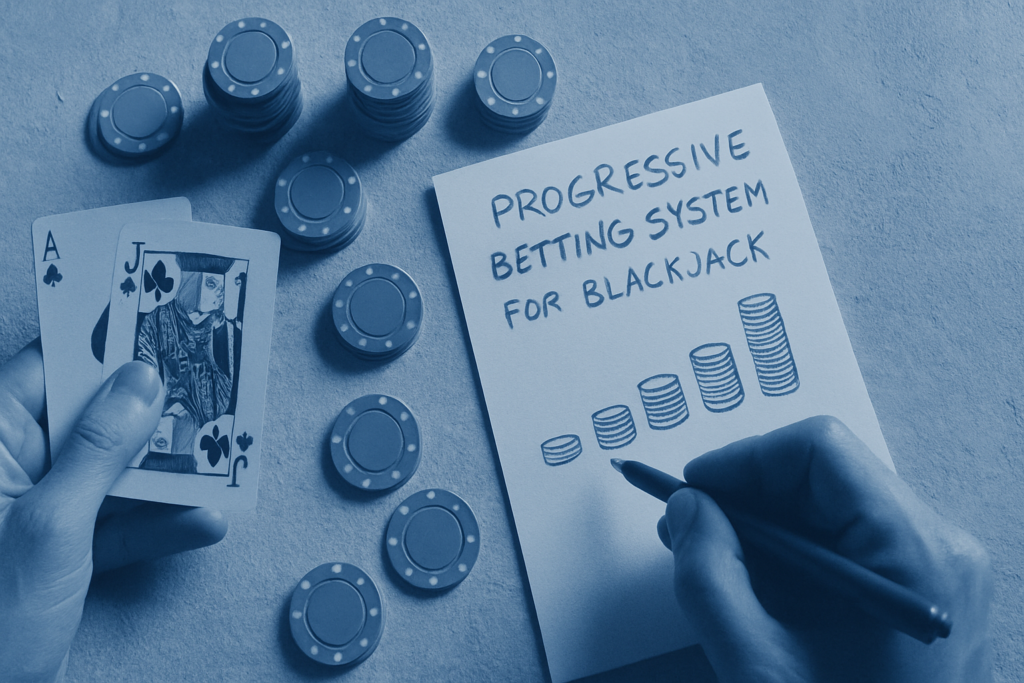
Progressive Betting: Adjusting your bet size based on previous outcomes. This includes systems like:
Martingale: Doubling your bet after each loss until you win. Risky, with high bankroll requirements.
Paroli: Increasing your wager after wins rather than losses; designed to ride hot streaks sustainably.
Each system has pros and cons no strategy can beat the house over time, but the right choice can align with your gameplay goals and risk tolerance.
Navigating Cold Streaks
Even the best players hit rough patches. The key is knowing how to limit damage without chasing losses:
Set loss limits before each session and stick to them.
Break up longer sessions into segments with built in review points.
Don’t increase your bet to “get even” this often leads to greater losses.
Pro Level Bankroll Management
Managing your bankroll separates casual players from consistent ones. Treat your funds like an investment:
Allocate a dedicated blackjack bankroll separate from everyday spending.
Use betting units, usually 1 2% of your bankroll, to size your bets.
Reassess your bankroll monthly to adjust your units and track performance.
Smart bankroll decisions extend your playing time and reduce the emotional toll of losing streaks.
Learn More: Advanced Systems & Techniques
Looking to go deeper? Explore more advanced strategies, betting systems, and expert tips here:
➡️ Discover deeper blackjack strategies
Avoiding Common Pitfalls
Most blackjack losses don’t come from bad luck they come from bad decisions. One of the biggest traps? Misreading the dealer’s upcard. Players often get nervous when they see a face card or assume the dealer will bust when showing a 6. Smart play means knowing the odds, not guessing based on a gut feeling. If the dealer shows a 2 through 6, they’re in a weak position your job is to avoid risking a bust. But against a 9, 10, or ace, you’ll need to be more aggressive.
Another killer: emotional tilt. Chasing losses after a tough hand makes everything worse. It’s easy to slip into autopilot or throw strategy out the window after a string of bad luck. That’s when bankrolls burn fast. Walking away or regrouping isn’t weak it’s strategic. Blackjack rewards focus, not frustration.
Lastly, don’t pin your hopes on betting systems. Martingale, Paroli, Labouchère none of them change the house edge. They might stretch your session or feel structured, but they don’t guarantee wins. Betting smarter starts with knowing when to bet, not just how. Systems can help with discipline, but they’re not magic.
Avoid these three habits, and you’ll already be ahead of most players at the table.
Playing with Purpose
Blackjack isn’t just about chasing the next win it’s about showing up at the table with a plan. That starts with setting realistic session goals. Whether it’s to play 100 hands, stop after a fixed win/loss amount, or practice a specific strategy, you’ve got to define what success looks like before the cards start flying.
Tracking results helps, but don’t overdo it. Logging basic stats like hands played, buy ins, and final outcome can show patterns but obsessing over every hand will kill the fun and warp your decisions. You’re playing a long term game, not running a day trading desk.
The real edge comes from combining strategy with discipline. Know your betting limits. Stick to your move decisions, especially when emotion threatens to take the wheel. Some days you’ll lose and still play well. That’s the point. Blackjack played with focus and purpose isn’t just more sustainable it’s more satisfying.