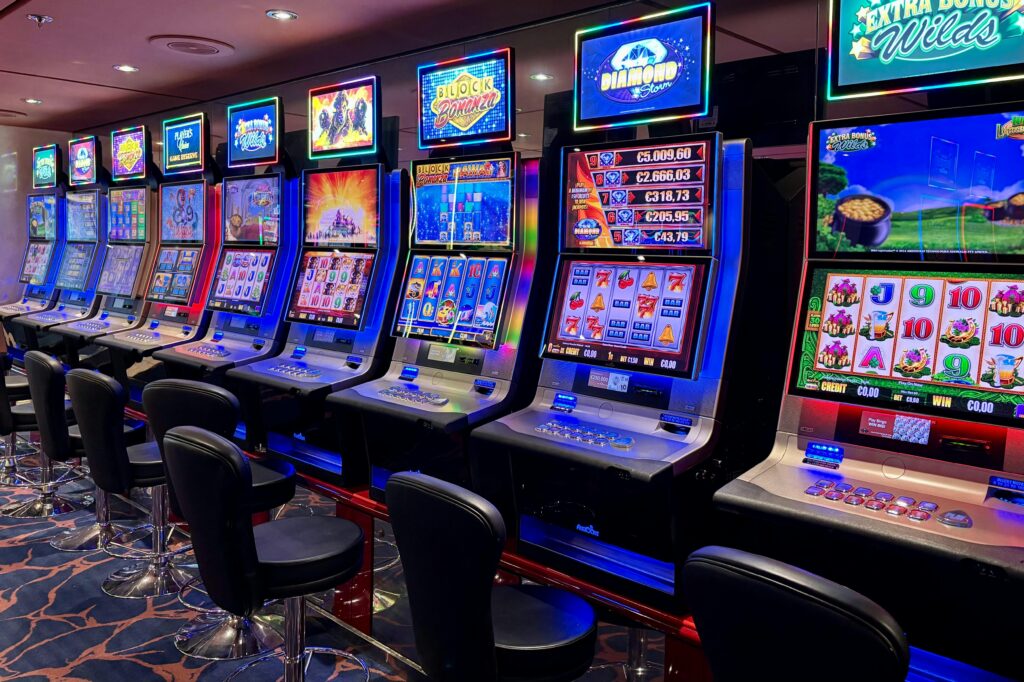
Interactive slot features shape engagement by adding moments of participation instead of a purely passive rhythm. Modern games build involvement through prompts, progress displays, and reactive reel events that keep attention anchored to what is happening now.
Engagement increases when the interaction feels clear and connected to the theme, not layered on top as decoration. The result is a play experience that feels more like a sequence of connected scenes than a loop of identical spins.
This article explains the main interactive features that drive that effect and why they hold attention so reliably.
Choice-Based Bonuses and Branching Scenes
Choice mechanics raise engagement because they create a brief pause where the game asks for a selection and then responds to it. That can appear as pick screens, bonus doors, card flips, or character choices.
The key is not complexity but relevance. A choice feels meaningful when it leads to a different animation path or a different bonus style that looks and behaves differently.
Branching free spins are a common form. One option may feature more wild movement, another may feature multipliers, and another may feature respins.
Even when the underlying math stays hidden, the visible structure changes and makes the bonus round feel personal.
The feature also improves clarity because the player sees a direct link between an action and an outcome. This is the kind of interaction that turns a bonus trigger into a scene rather than a simple event.
Feature Layers That Increase Variety in a Session
Many games include optional feature layers that change the density of interactive moments. These layers often sit inside the interface as toggles or as alternative entry paths into a bonus. They matter for engagement because they reshape pacing.
A session can feel steady and gradual in one mode and more concentrated in another mode, even though the core concept stays the same.
Game libraries that allow you to filter titles by features make this shift immediately visible. FanDuel real money slots is a good example of this. Categories are built around features like expanding reels, respins, or collection bonuses, which reflect how interactive elements now drive player interest.
Instead of choosing a game based only on theme, players often select titles based on how they play and how actively they involve the user. The perceived value comes from variety and structure.
When interactive events appear more often or more clearly, attention stays higher because the player sees more state changes and fewer repetitive sequences.
Responsive Feedback That Keeps Attention on the Reels
Slots communicate constantly through movement, highlights, sound cues, and meters. Interactive design uses that feedback to create anticipation and understanding. Engagement rises when the game signals what is building and why. A filling meter is a simple example. It shows progress, predicts a future event, and creates a visual reason to watch each spin.
Symbol behavior cues play a similar role. Some titles glow or pulse symbols that can upgrade, split, or transform, which frames the next spin as part of a continuing process.
Reel modifiers also rely on feedback. Expanding reels, shifting rows, sticky symbols, and moving wilds are easier to follow when the interface clearly marks the changed area.
This responsiveness turns observation into participation. Even without making a selection, the player stays mentally involved because the game is presenting readable signals that invite attention and interpretation.
Progression Systems Turn Spins Into a Connected Journey
Progression features increase engagement by linking separate moments into a longer arc. Collection bars, ladders, and chapter maps create continuity that makes the game feel less repetitive.
This is especially effective when progress is shown in steps. A visible sequence of milestones makes the session feel structured because each spin contributes to a defined track.
Collection mechanics add a thematic layer. Tokens, relics, letters, or icons accumulate and unlock a bonus mode or a reel upgrade. Some games also include persistence, where progress remains available beyond a single session. That persistence can make the interface feel like a long-term journey rather than a short loop.
Even when progress resets each time, the design can still feel engaging when the milestones are clearly presented, and the change that occurs at each milestone is visually distinct. The strongest systems create a clear before and after state that feels earned through play.
Tempo Tools and Automation That Still Preserve Interaction
Automation features support engagement when they maintain flow while keeping interactive moments intact. Autoplay is one example. It speeds through the base cycle, but interactive design typically pauses it for bonus triggers or selection scenes. That pause is important because it preserves the feeling that key moments remain active and responsive.
Speed settings also influence how interactive a session feels. Faster spins compress the time available to notice meter changes, symbol upgrades, and reel transformations. Slower pacing makes those details more legible and can make feature-driven games feel richer.
Information panels and rule summaries also serve tempo. A clear feature explanation reduces friction, making it easier to follow new modes as they appear.
Overall, these tools keep the experience smooth while still highlighting the scenes where interaction matters most, which strengthens engagement without adding complexity.
Why Interactive Features Keep Players Engaged
Interactive slot design encourages engagement by introducing choice, variety, readable feedback, and progression. These features create moments that feel like responses to what just happened, which makes attention more stable over time.
Choice-based bonuses add a personal feeling to the experience. Feature layers change pacing and keep sessions from blending. Responsive feedback makes reel events easier to follow and more satisfying to watch.
Progression systems connect spins into a visible journey. Tempo tools support flow while protecting interactive moments. Together, these elements make modern slots feel more like evolving experiences than static loops, and that is the core reason engagement increases.